
Common plants in the Tampa Bay Watershed and why they are important for our watershed
Some of the naturally occurring plants that grow in the watershed include different types of mangroves, seagrasses, and other salt-tolerant plants. Plants like these not only thrive in the watershed but they also support the health of the watershed and the species that live there. The common watershed plants can shelter and feed local organisms, filter pollutants in the water, and prevent shore erosion. Without the presence of these plants, the watershed would be much more vulnerable and it wouldn’t be able to support the biodiversity it currently has.
Mangroves, including red mangrove (Rhizophora mangle), black mangrove (Avicennia germinans), and white mangrove (Laguncularia racemosa), are commonly found along the shoreline of the Tampa Bay Watershed. These trees stabilize coastlines by trapping sediment with their root systems, reduce erosion from waves and storms, and provide a nursery habitat for juvenile fish, crabs, shrimp, and nesting birds. Mangroves also improve water quality by filtering out pollutants and cycling nutrients.
Seagrasses such as turtle grass (Thalassia testudinum), shoal grass (Halodule wrightii), and manatee grass (Syringodium filiforme) grow in shallow waters throughout Tampa Bay. These submerged plants trap sediments and absorb nutrients, which improves water clarity and supports photosynthesis. Seagrass beds serve as essential food and shelter for fish, invertebrates, manatees, and sea turtles, making them critical to the bay’s fisheries.
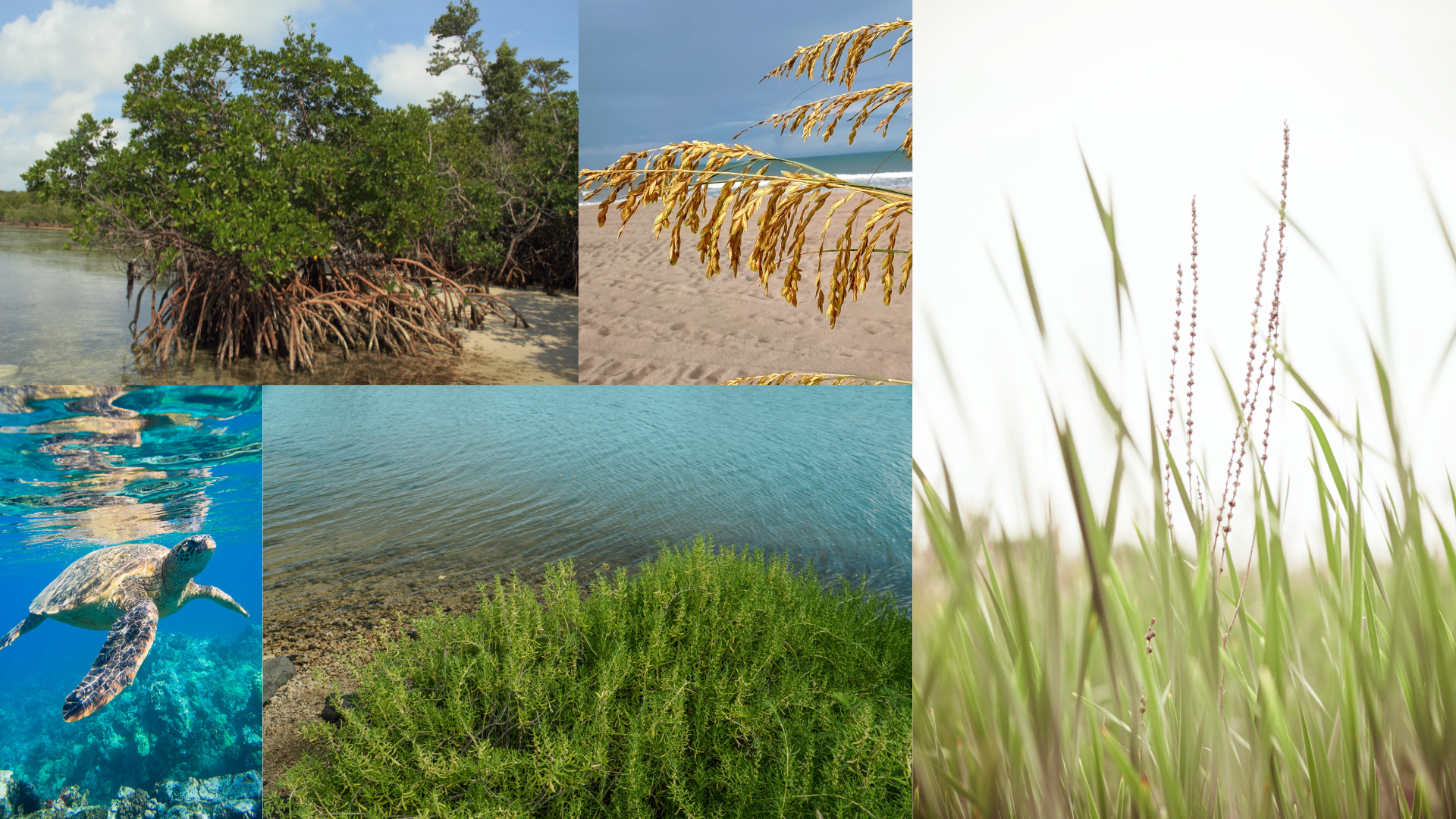
Plants that dominate the salt marsh, like smooth cordgrass (Spartina alterniflora) and black needlerush (Juncus roemerianus) cover overlapping areas where freshwater and saltwater meet and mix. These plants bind densely to the soil, slow water movement, and reduce shoreline erosion all the while filtering pollutants from runoff. As they decay, these marsh plants create detritus, a cornerstone that fuels its food webs, supporting fish, crabs, and coastal birds.
Salt-tolerant plants, including glasswort (Salicornia spp.), saltwort (Batis maritima), and Carolina sea lavender (Limonium carolinianum) grow in high-salinity flats and salt barrens. These plants stabilize sediments in harsh environments and create shallow pools that provide feeding habitat for birds and juvenile marine organisms. Their presence helps maintain growth in areas with extremely salty conditions.
Freshwater wetlands and upland areas within the watershed contain native grasses, shrubs, and trees such as sea oats (Uniola paniculata) and wetland grasses near rivers and marsh edges. These plants slow and absorb stormwater, reducing flooding and filtering water before it reaches Tampa Bay. They also provide habitat for terrestrial and aquatic wildlife and act as natural buffers that protect sensitive coastal ecosystems.
